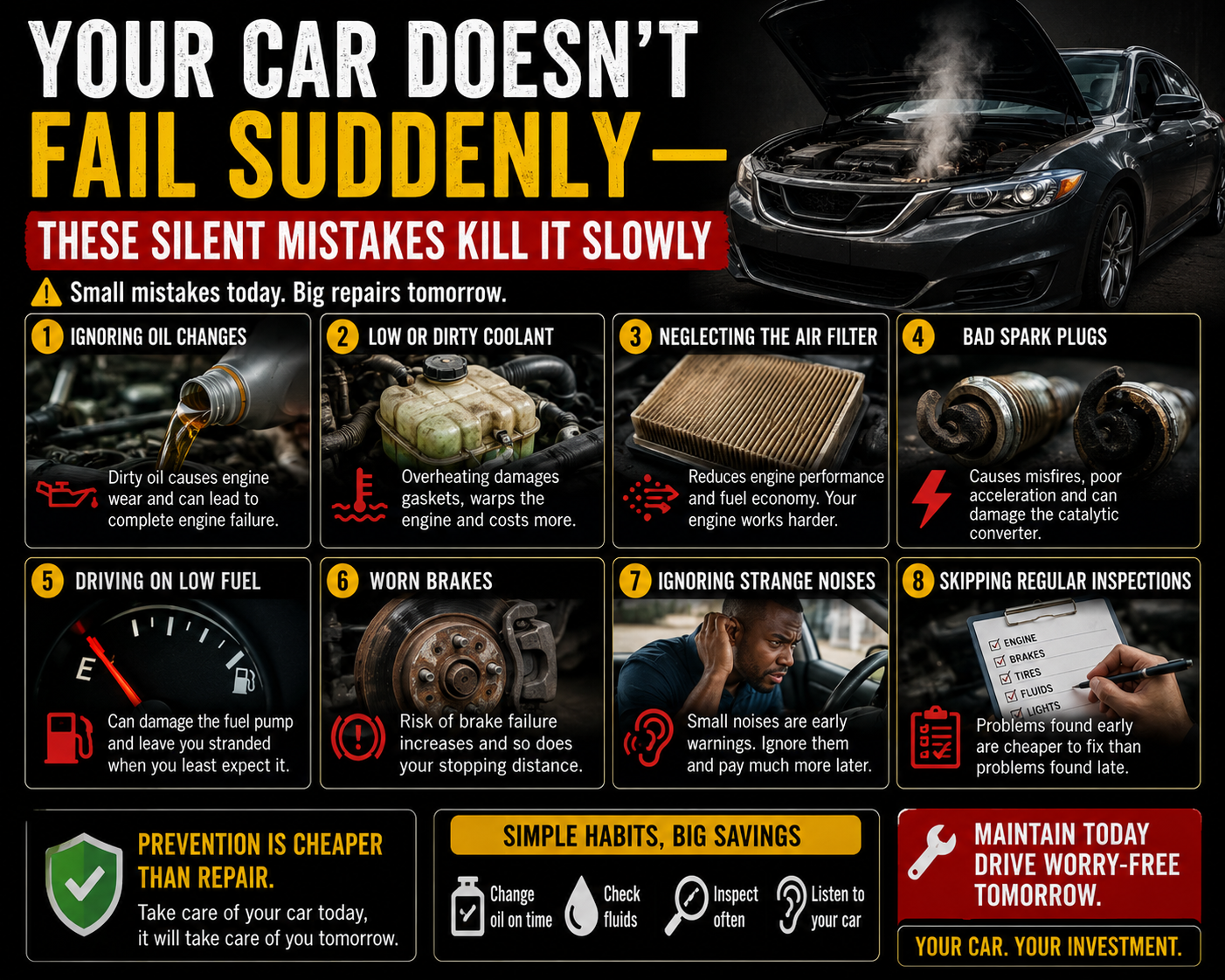
Walk into any dealership and you will hear it — transmission fluid is lifetime, differential oil never needs changing, the coolant lasts forever. These claims sound convenient. They are also one of the most expensive lies in automotive maintenance. Understanding what actually happens to these fluids over time can save you thousands in preventable repairs.
Maintenance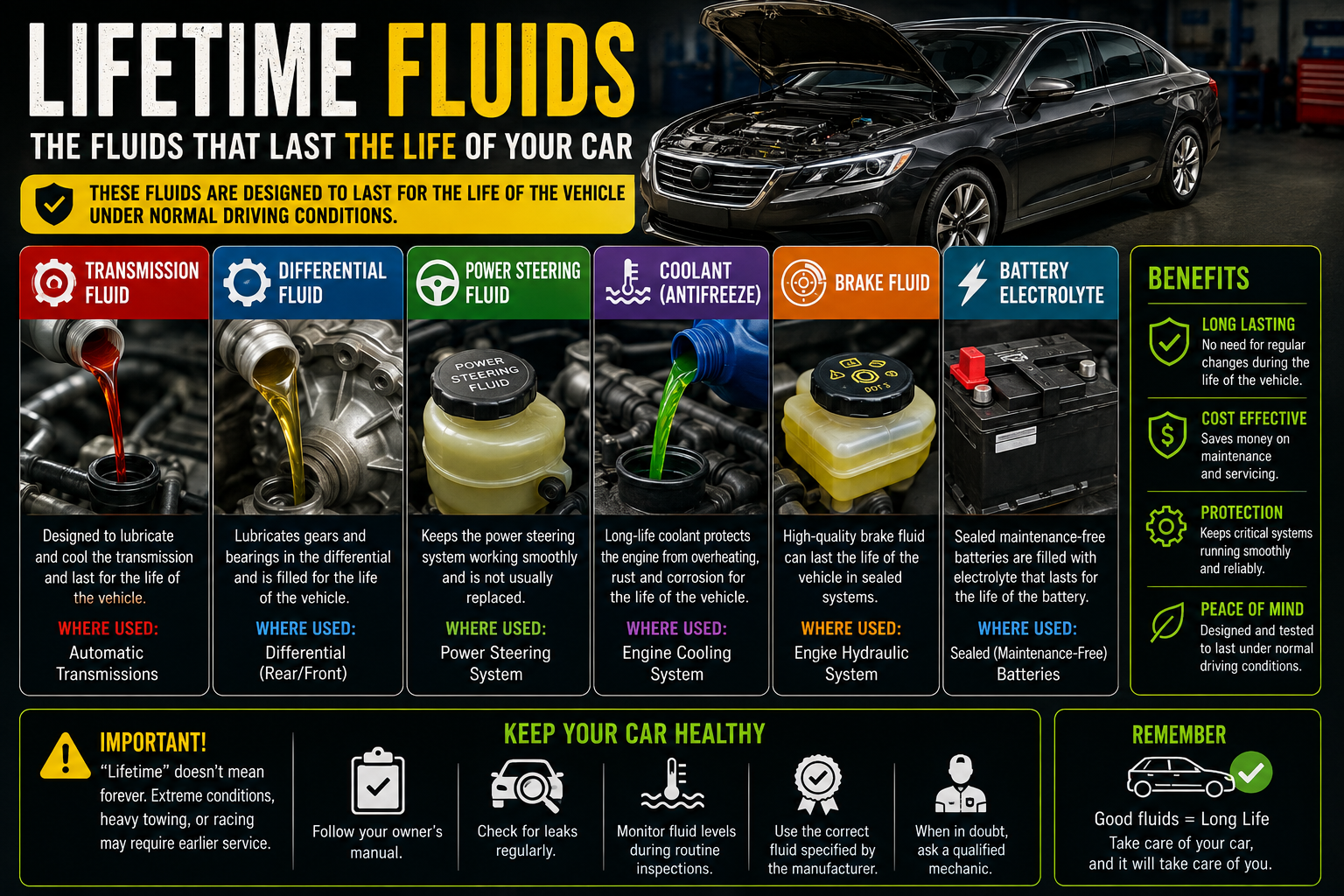
Maintenance
Lifetime Fluids: Why They Slowly Ruin Your Car
February 1, 2026 6 min readMaintenance
"Lifetime fluid" is marketing — not engineering. Here's the truth that costs drivers thousands every year.
Written by
Car Guide CrewThe Car Guide Crew editorial team publishes practical, mechanic-verified automotive knowledge — helping drivers understand, diagnose, and maintain their vehicles.
DiagnosticsEngine SystemsMaintenanceElectrical Systems
Published: Feb 1, 2026
What Does Lifetime Actually Mean?
When a manufacturer labels a fluid as lifetime they mean the expected warranty period of the vehicle — typically 5 years or 100,000 kilometres. They do not mean the mechanical lifespan of the car. Most drivers in Kenya run their vehicles well past 200,000 kilometres. Beyond the warranty window these fluids continue to degrade while most owners assume they are permanently fine.
The lifetime fluid recommendation is partly an engineering claim and partly a marketing decision. A manufacturer that recommends no transmission fluid changes has lower maintenance costs on paper — which looks attractive to buyers comparing service costs. The long term repair bill tells a different story.
Transmission Fluid — The Most Dangerous Claim
Automatic transmissions operate under extreme heat and pressure. The fluid inside is doing three jobs simultaneously — lubricating clutch packs and planetary gears, providing hydraulic pressure to engage gears, and cooling internal components.
What happens to transmission fluid over time:
- Heat breaks down the base oil reducing its viscosity
- Friction modifiers that allow smooth clutch engagement deplete
- Metal particles from normal wear contaminate the fluid
- The fluid darkens from red/pink to dark brown or black
- Burnt smell develops as the fluid loses its heat resistance
The result of never changing transmission fluid:
- Harsh or delayed gear shifts
- Transmission slipping under load
- Overheating due to reduced cooling capacity
- Premature clutch pack wear
- Complete transmission failure
| Fluid Condition | Color | Smell | Action |
|---|---|---|---|
| Good | Pink/red, transparent | Slightly sweet | None needed |
| Aging | Dark red/brown | Mild burnt smell | Change soon |
| Failed | Dark brown/black | Strong burnt smell | Change immediately |
A transmission fluid service costs $150–$350. A transmission rebuild costs $2,000–$4,500. A full replacement costs $3,000–$7,000. The fluid change is not optional maintenance — it is cheap insurance against the most expensive drivetrain repair most drivers will ever face.
Differential and Transfer Case Oil
The differential transfers power from the driveshaft to the wheels while allowing them to rotate at different speeds during cornering. The transfer case distributes power between front and rear axles on 4WD and AWD vehicles. Both are filled with gear oil critical for protecting hypoid gears operating under extreme pressure.
What happens when differential oil is never changed:
- Metal shavings from normal gear wear accumulate in the oil
- The oil loses its extreme pressure additives that protect hypoid gears
- Gear surfaces begin to pit and wear unevenly
- A whining or howling noise develops during acceleration
- Gear failure follows — often catastrophically
This is particularly relevant for Japanese 4WD vehicles common in Kenya — Toyota Land Cruiser, Prado, Hilux, and Fortuner all have differentials and transfer cases that benefit significantly from regular fluid changes despite manufacturer claims.
Coolant (Antifreeze)
Coolant is not just water with color added. It contains a complex package of corrosion inhibitors, scale inhibitors, and pH buffers that protect every metal and rubber surface in the cooling system. Over time these additives deplete — the coolant becomes acidic and begins attacking the very components it is supposed to protect.
Effects of old degraded coolant:
- Internal corrosion of aluminum engine components and radiator
- Water pump seal failure from acidic coolant
- Pinhole leaks developing in the radiator
- Thermostat housing corrosion causing leaks
- Heater core blockage from scale deposits
A simple coolant test strip from any auto parts store tests the pH and freeze protection of your coolant in seconds. If the pH is below 7 the coolant is acidic and corroding your engine from the inside.
Power Steering Fluid
Hydraulic power steering fluid lubricates the power steering pump, rack seals, and hose connections. Over time the fluid absorbs moisture, oxidizes, and loses its viscosity. The result is a power steering system that develops leaks and eventually fails.
Signs of degraded power steering fluid:
- Dark or murky fluid instead of clear or light yellow
- Whining noise when turning the steering wheel
- Stiff steering especially when cold
- Power steering fluid leaks from seals
Brake Fluid
Brake fluid is hygroscopic — it absorbs moisture from the atmosphere through the brake system seals and reservoir cap. As moisture content increases the boiling point of the fluid drops. Under hard repeated braking the contaminated fluid can boil inside the caliper creating vapor bubbles — vapor does not compress like fluid so the brake pedal goes soft or to the floor.
Brake fluid testing strips cost less than $5 and take 30 seconds. Dip the strip in the brake fluid reservoir, compare the color change to the chart. If moisture content is above 3% the fluid needs changing. This single $5 test can tell you whether your brakes will hold under hard stopping in an emergency.
Recommended Service Intervals
| Fluid | Manufacturer Claim | Real World Recommendation |
|---|---|---|
| Automatic transmission fluid | Lifetime | Every 60,000–80,000 km |
| Differential oil | Lifetime | Every 50,000–80,000 km |
| Transfer case oil | Lifetime | Every 50,000–80,000 km |
| Coolant | 5 years / 150,000 km | Every 3 years / 80,000 km |
| Power steering fluid | Lifetime | Every 50,000–80,000 km |
| Brake fluid | 2 years | Every 2 years regardless of mileage |
Estimated Service Costs
| Service | Estimated Cost | Cost of Ignoring |
|---|---|---|
| Transmission fluid service | $150–$350 | $2,000–$7,000 rebuild |
| Differential oil change | $80–$150 | $500–$2,000 gear repair |
| Coolant flush | $80–$150 | $400–$1,500 radiator or pump |
| Power steering flush | $80–$150 | $800–$1,500 rack replacement |
| Brake fluid change | $60–$120 | Brake failure — priceless |
FAQ
My car has never had the transmission fluid changed and it still shifts fine — should I change it now? Yes, but with caution. On very high mileage transmissions that have never been serviced, a fluid change can sometimes disturb varnish deposits that were sealing worn clutch packs. Have the fluid condition checked by a mechanic first — they may recommend a partial drain and refill rather than a complete flush.
How do I check differential oil level? Most differentials have a fill plug on the side of the differential housing. With the vehicle level, remove the plug — if oil runs out or is level with the hole the differential is full. If it is low add the correct gear oil specification from your owner's manual.
Can I mix different coolant colors? No — different coolant colors use different additive packages that are chemically incompatible. Mixing causes the additives to react, form deposits, and lose their protective properties. Always use the coolant type specified for your vehicle.
Is a transmission fluid flush the same as a drain and refill? No. A drain and refill replaces about 40-50% of the fluid. A flush uses a machine to replace nearly all the fluid including what is in the torque converter and cooler lines. For severely neglected transmissions a drain and refill is often recommended first to avoid disturbing built-up deposits.