Your car's radiator is one of the most important components keeping your engine alive. Without it working correctly, your engine overheats within minutes — and overheating is one of the fastest ways to destroy an engine completely. Understanding how your radiator works, what can go wrong, and how to maintain it properly can save you from one of the most expensive repairs a car owner will ever face.
Engine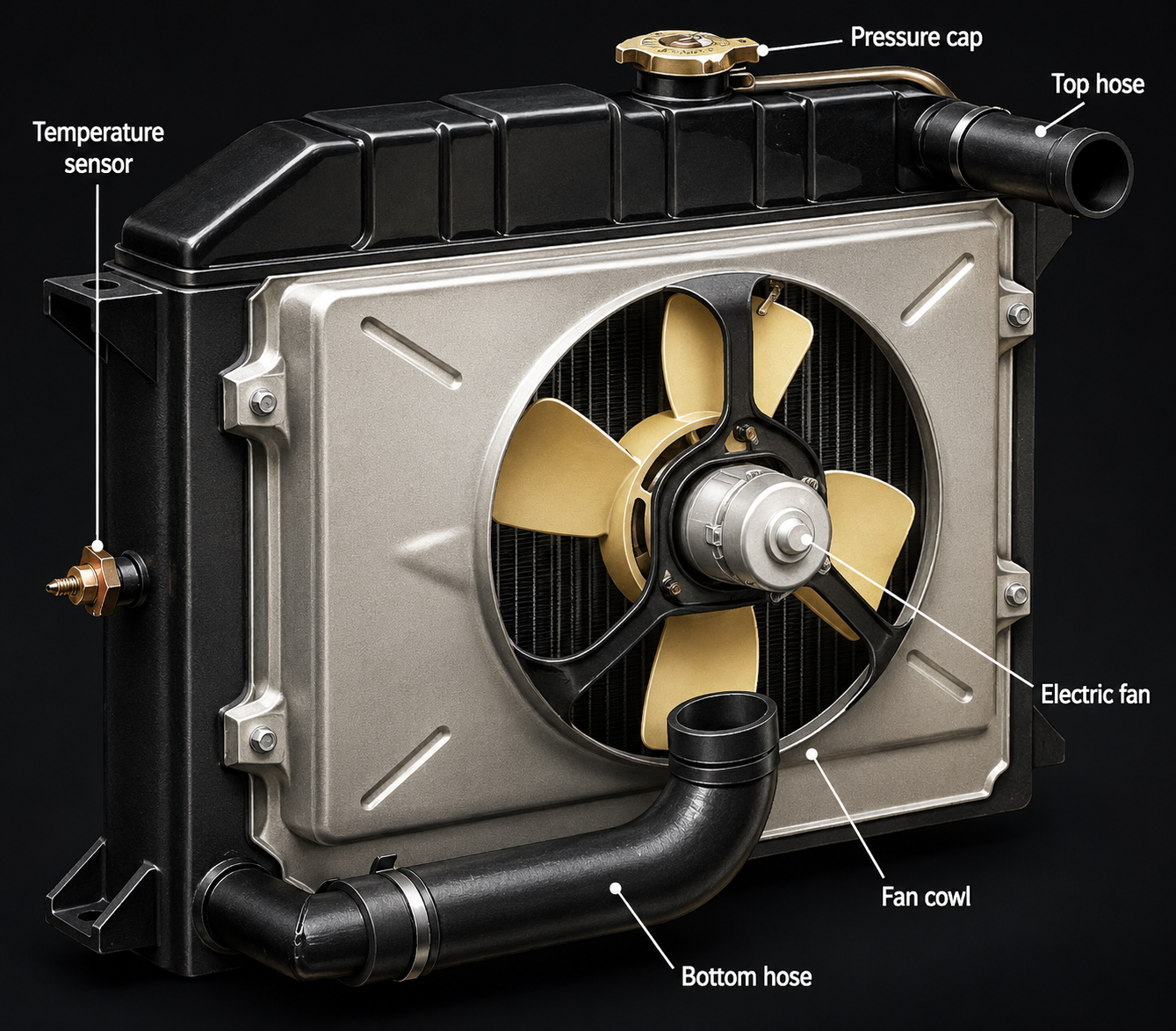
Engine
How a Car Radiator Works — and What Goes Wrong
August 20, 2026 5 min readEngine
Your radiator keeps your engine from destroying itself. Here is how it works, what goes wrong, and how to maintain it before it causes an expensive breakdown.
Written by
Car Guide CrewThe Car Guide Crew editorial team publishes practical, mechanic-verified automotive knowledge — helping drivers understand, diagnose, and maintain their vehicles.
DiagnosticsEngine SystemsMaintenanceElectrical Systems
Published: Aug 20, 2026
What Does a Car Radiator Actually Do?
Every time your engine runs, it produces enormous amounts of heat from the combustion process. Left unchecked, this heat would destroy pistons, warp cylinder heads, and seize the entire engine in minutes. The cooling system — with the radiator at its core — removes this heat continuously and keeps the engine within a safe operating temperature range.
The radiator works by circulating coolant (antifreeze mixed with water) through the engine block where it absorbs heat, then pumping that hot coolant through the radiator where the heat is transferred to the air passing through the fins. The cooled coolant then returns to the engine to absorb more heat — a continuous cycle that never stops while the engine runs.
The Parts of a Radiator — What You Are Looking At
A modern car radiator has several key components working together:
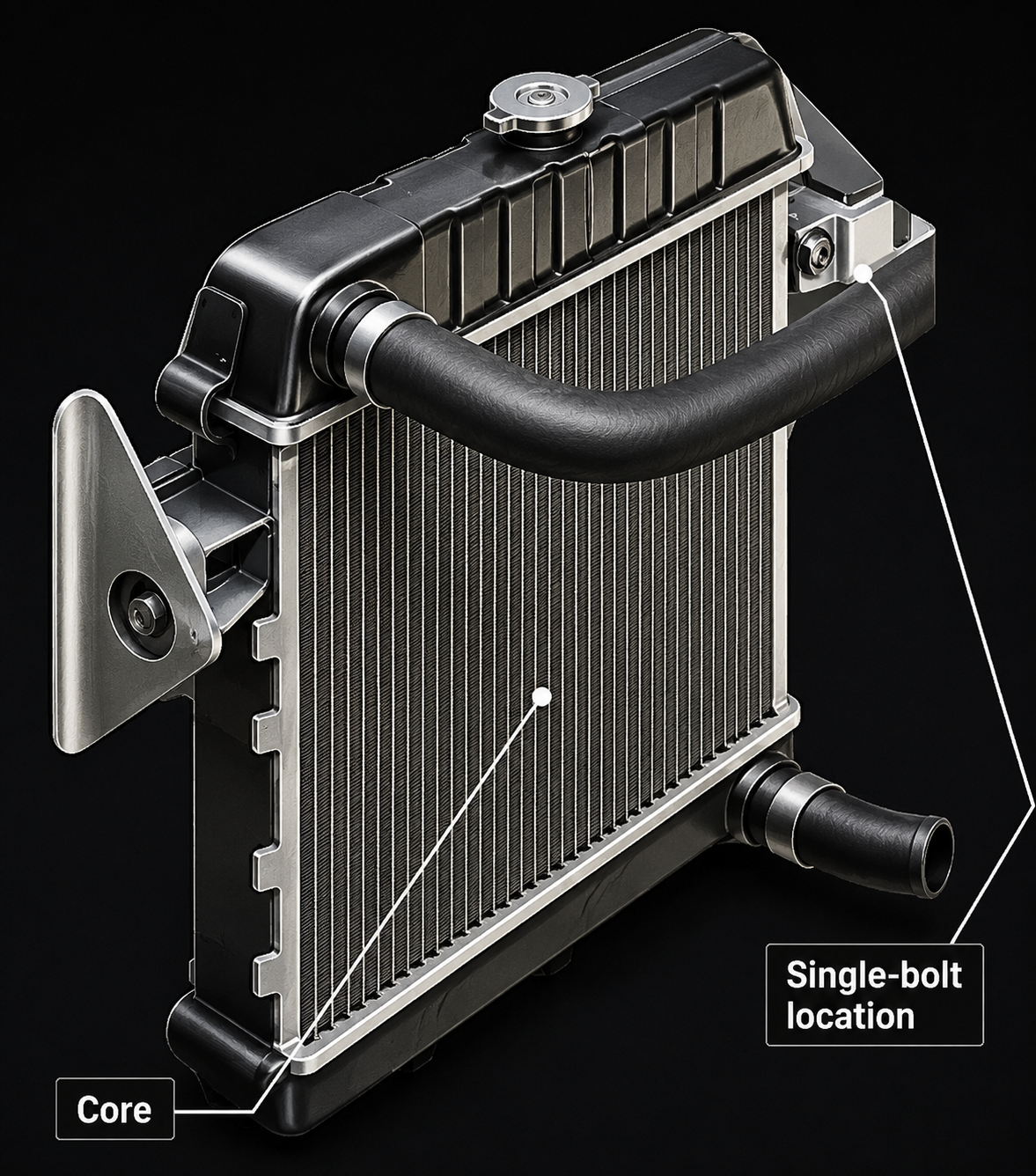
- Core — the main body of the radiator containing hundreds of thin aluminium tubes and fins through which coolant flows. Air passes through the gaps between the fins removing heat from the coolant inside
- Top tank — receives hot coolant from the engine via the top hose
- Bottom tank — holds cooled coolant before it returns to the engine via the bottom hose
- Pressure cap — seals the system and maintains pressure, which raises the boiling point of the coolant. A failing pressure cap is a surprisingly common cause of overheating
- Top hose — carries hot coolant from the engine to the radiator
- Bottom hose — returns cooled coolant from the radiator back to the engine
- Electric fan — pulls air through the radiator core when the car is stationary or moving slowly. Controlled by the coolant temperature sensor
- Fan cowl — the plastic housing around the fan that directs airflow efficiently through the radiator core
- Temperature sensor — monitors coolant temperature and triggers the electric fan when temperature rises above the set threshold
Copper vs Aluminium Radiators
Earlier cars used radiators made from copper and brass alloys. These were very durable and could be repaired by soldering when damaged. Many older Toyota and Honda vehicles in Kenya still have copper core radiators that can be repaired at a local radiator shop for a fraction of the cost of a new one.
Most modern cars have radiators with aluminium cores and plastic top and bottom tanks. These are lighter and cheaper to manufacture but come with important limitations:
- Aluminium does not dissipate heat as efficiently as copper — so more fins are needed, making the core more easily clogged by dirt and debris
- The plastic tanks crack over time from heat cycling and pressure — a very common source of coolant leaks on high mileage Japanese imports
- They cannot be soldered or repaired — damage usually means full replacement
- Forcing off a hose or overtightening a hose clip can crack the plastic stubs where hoses connect
On aluminium radiators with plastic tanks, never use a screwdriver to lever off a stuck hose. The plastic stub will crack — and a cracked radiator stub means replacing the entire radiator. Instead, twist the hose gently back and forth while pulling to break the seal. If a hose is stuck solid, slit it at the stub end with a sharp knife and fit a new hose.
Common Radiator Problems
1. Coolant Leaks
The most common radiator problem. Leaks occur at:
- Hose connections — hoses harden and crack with age
- Plastic tank seams — the seal between the plastic tank and aluminium core deteriorates
- Core pinhole leaks — from internal corrosion caused by old acidic coolant
- Drain plug — corrodes and weeps over time
2. Clogged Radiator Core
Aluminium radiators with dense fins clog easily from road dirt, insects, and debris. A clogged core cannot transfer heat efficiently — the engine runs hotter than normal even with the coolant level correct and the thermostat working properly.
Hose down your radiator core at least once a year — spray water from the engine side outward to push dirt back out the way it came in. Never use a pressure washer directly on the fins — the high pressure bends and crushes the delicate aluminium fins permanently reducing cooling efficiency.
3. Damaged Fins
The thin aluminium fins that form the radiator core are easily bent or crushed by stones, road debris, or even overzealous cleaning. Bent fins block airflow through the core. A fin comb tool can straighten them — ask at any auto parts store.
4. Failing Pressure Cap
The pressure cap maintains the system at 0.9–1.3 bar above atmospheric pressure. This raises the boiling point of the coolant from 100°C to approximately 120°C — giving the cooling system much more heat capacity. A cap that fails to hold pressure causes the coolant to boil at a lower temperature, leading to overheating that seems unexplained since the coolant level may be correct.
5. Blocked Radiator Core Internally
Scale deposits, rust, and old coolant breakdown products build up inside the radiator tubes over time — restricting coolant flow. This is why coolant should be flushed and replaced on schedule rather than left indefinitely.
How To Drain a Radiator
Draining the radiator is needed when replacing coolant, removing the radiator, or performing cooling system work. Always do this with the engine completely cold — never when hot.
- Wait for the engine to cool completely — at least 2 hours after last running. Never open a hot cooling system
- Remove the pressure cap — turn it slowly to the first stop and allow any remaining pressure to escape before removing fully
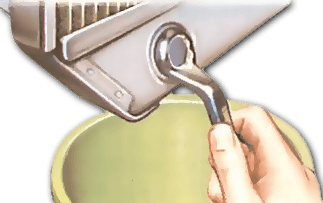
- Locate the drain plug or tap — usually at the bottom corner of the radiator. Some vehicles have a plastic drain cock, others have a bolt-type drain plug
- Place a clean container beneath the drain point — to catch the coolant for disposal or reuse
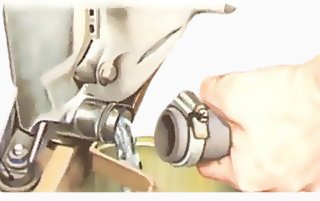
- Open the drain — turn the drain cock anticlockwise or remove the drain plug. If no drain exists disconnect the bottom hose at the radiator end
- Allow to drain completely
- If saving coolant with antifreeze — strain it through clean cloth to remove rust and debris before storing for reuse. Have the antifreeze concentration checked before reusing
Never open the radiator pressure cap or any cooling system component while the engine is hot or warm. The system is pressurized — releasing it while hot causes boiling coolant to spray out violently causing severe burns. Always wait until the engine is completely cold.
How To Check Your Coolant Level and Condition
Most modern cars have a translucent expansion tank rather than checking the radiator directly. Check the level against the MIN and MAX marks on the side of the tank. Always check when cold — the level rises when hot and a cold reading is more accurate.
Also check the condition:
- Good coolant — bright green, blue, orange, or pink depending on type. Clear and clean
- Old coolant — faded color, slightly murky. Still functional but due for replacement
- Bad coolant — brown, rusty, or oily. Replace immediately — it is no longer protecting the system
- Milky or frothy coolant — oil contamination from a blown head gasket. Do not drive — serious engine damage is occurring
If you open the radiator cap when cold and see a brown sludgy or oily film on the inside of the cap or on the coolant surface, this is a classic sign of a failing head gasket. The engine oil is mixing with the coolant. Do not continue driving — a head gasket repair done early costs $1,500–$2,500. Left until the engine overheats completely the repair cost doubles or triples.
When To Flush and Replace Coolant
| Coolant Type | Replacement Interval |
|---|---|
| Standard green coolant (IAT) | Every 2 years or 40,000 km |
| Long life orange/pink coolant (OAT) | Every 5 years or 100,000 km |
| Extended life coolant (HOAT) | Every 5 years or 150,000 km |
Signs Your Radiator Needs Attention
| Symptom | Likely Cause | Urgency |
|---|---|---|
| Engine temperature gauge rising above normal | Low coolant, clogged core, failing thermostat | High — address immediately |
| Coolant level keeps dropping | External or internal leak | High — find leak source |
| Coolant puddle under car when parked | Radiator leak, hose leak | High |
| Sweet smell from engine bay | Coolant leaking onto hot surfaces | High |
| White steam from engine bay | Coolant boiling or leaking onto exhaust | Very High — stop driving |
| Milky oil on dipstick | Head gasket failure — coolant in oil | Very High — stop driving |
| Fan running constantly | Engine running hot, failed temperature sensor | Medium |
Estimated Repair Costs
| Repair | Estimated Cost |
|---|---|
| Coolant top up | $10–$30 |
| Coolant flush and refill | $80–$150 |
| Radiator hose replacement | $80–$200 |
| Pressure cap replacement | $20–$60 |
| Radiator leak repair (copper type) | $50–$150 at radiator shop |
| Radiator replacement (aluminium) | $300–$800 including labour |
| Electric cooling fan replacement | $150–$400 |
| Thermostat replacement | $100–$300 |
| Head gasket repair | $1,500–$3,500 |
FAQ
Can I top up with plain water instead of coolant? In an emergency — yes. Plain water will prevent overheating temporarily. But water alone does not protect against corrosion and has a lower boiling point than a proper coolant mix. Always replace with the correct coolant mixture as soon as possible.
Can I mix different coolant colors? No. Different coolant types use chemically incompatible additive packages. Mixing causes the additives to react, form gel-like deposits, and lose their protective properties. Always use the same type already in the system or flush completely before switching.
My radiator has a small crack in the plastic tank — can I repair it? Temporary repair products exist but they are short-term fixes. A cracked plastic radiator tank will continue to worsen. On aluminium-core plastic-tank radiators the correct repair is full radiator replacement.
How do I know if my thermostat is faulty? A thermostat stuck open causes the engine to take very long to warm up and run below normal temperature. A thermostat stuck closed causes rapid overheating. If your temperature gauge behaves abnormally — either too cold or overheating — the thermostat is a prime suspect and one of the cheapest cooling system parts to replace.
My car overheats only in traffic but is fine on the highway — why? This is typically a cooling fan problem. At highway speeds air rushes through the radiator naturally. At low speeds and in traffic the electric fan must do that job. If the fan motor, temperature sensor, or fan relay has failed the engine overheats only when stationary or slow. Test by turning on the air conditioning — this forces the fan to run and if the overheating stops the fan circuit has a fault.
More From Engine
 Engine
Car Shakes or Vibrates When Braking — Causes and Fix
Vibration through the steering wheel or brake pedal when stopping is one of the most common brake complaints. Here is what is causing it and what it costs to fix properly.
Aug 11, 2026 5 min
Read more  Engine
Squealing or Grinding Noise When Braking — Should You Stop Driving?
Brake noise is never random. Squealing means something specific. Grinding means something else entirely — and one of them requires you to stop driving immediately.
Aug 11, 2026 5 min
Read more  Engine
Car Cranks But Won't Start — Here Is What Is Wrong
The engine turns over but never fires. Here is the exact diagnostic process mechanics use to find the cause fast.
Aug 8, 2026 5 min
Read more