Your car's fuel system is responsible for one critical job — delivering the right amount of clean fuel to the engine at the right pressure, at exactly the right time. When any part of this system fails, the effects range from poor fuel economy and rough running all the way to a complete no-start condition. Understanding how the fuel system works and what each component does helps you diagnose problems faster and avoid expensive guesswork at the workshop.
Engine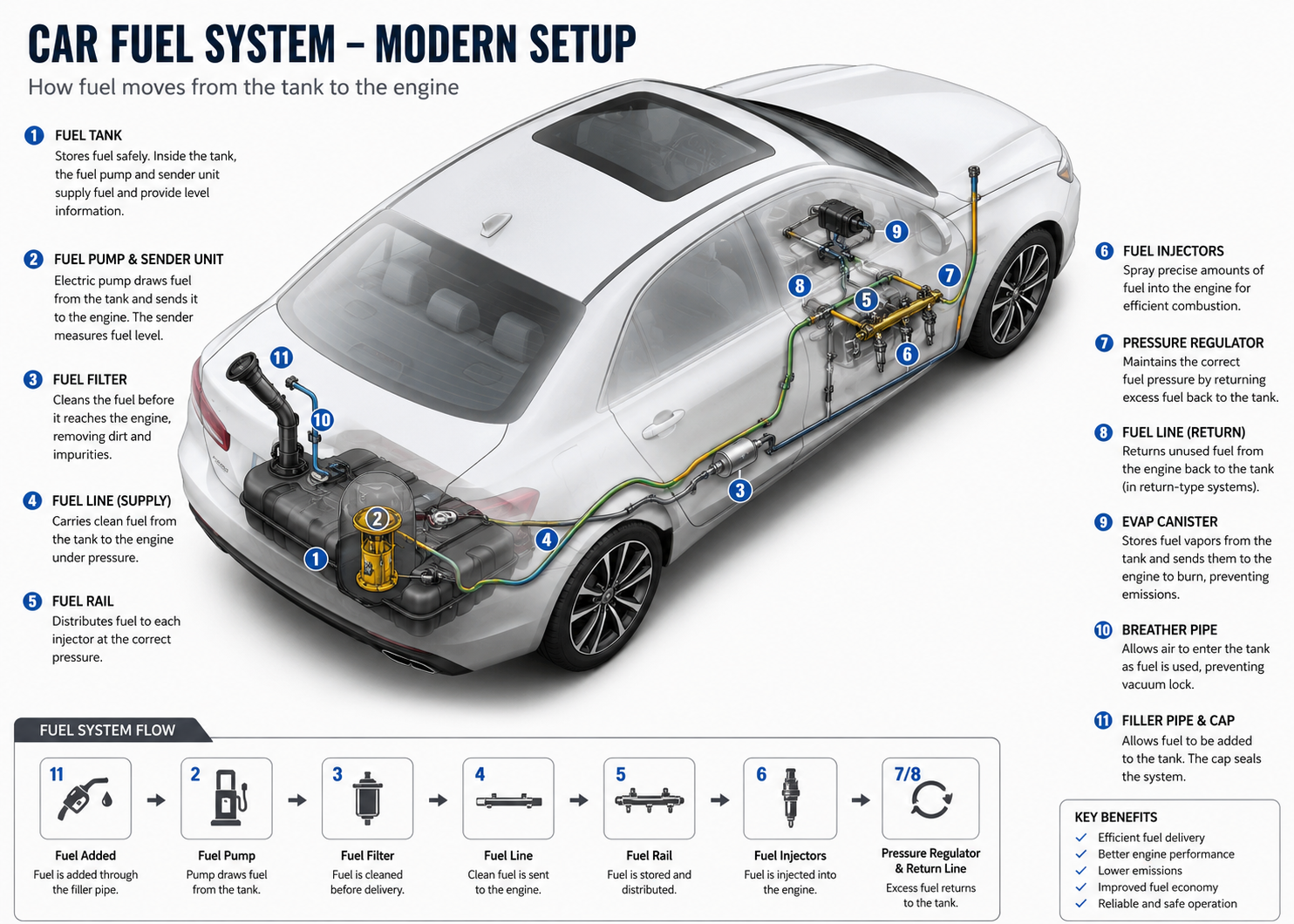
Engine
How Your Car's Fuel System Works — Components, Problems and Fixes
August 25, 2026 5 min readEngine
Your fuel system delivers clean fuel at the right pressure to keep your engine running. Here is how every component works and what happens when any one of them fails
Written by
Car Guide CrewThe Car Guide Crew editorial team publishes practical, mechanic-verified automotive knowledge — helping drivers understand, diagnose, and maintain their vehicles.
DiagnosticsEngine SystemsMaintenanceElectrical Systems
Published: Aug 25, 2026
How the Fuel System Works
The fuel system is a pressurized circuit that starts at the fuel tank and ends at the engine's combustion chambers. Every time you press the accelerator, the engine management system calculates exactly how much fuel is needed and commands the injectors to deliver it. The entire process happens hundreds of times per minute — and every component in the chain must work correctly for the engine to run properly.
The basic flow of fuel through the system:
- Fuel sits in the tank until the ignition is switched on
- The fuel pump activates and pressurizes the fuel line
- Fuel passes through the fuel filter which removes dirt and contaminants
- Clean pressurized fuel reaches the fuel rail
- The fuel pressure regulator maintains correct pressure in the rail
- The ECU commands each injector to open for a precise duration
- Fuel sprays into the intake port or directly into the combustion chamber
- The fuel mixes with air and ignites to produce power
The Main Components of the Fuel System
1. Fuel Tank
The fuel tank stores the fuel supply and houses the fuel pump assembly. Modern fuel tanks are made from high-density plastic rather than metal — they are lighter, do not corrode, and can be moulded into complex shapes to fit around other chassis components.
Inside the tank sits the fuel pump module which includes the pump itself, the fuel level sender (which operates your fuel gauge), and often a filter sock that provides the first stage of fuel filtration.
Common fuel tank problems:
- Fuel leaks from cracked plastic tank or damaged filler neck
- Fuel level sender failure causing inaccurate fuel gauge reading
- Debris contamination inside the tank
- Fuel pump module failure — the entire assembly needs replacement
2. Fuel Pump
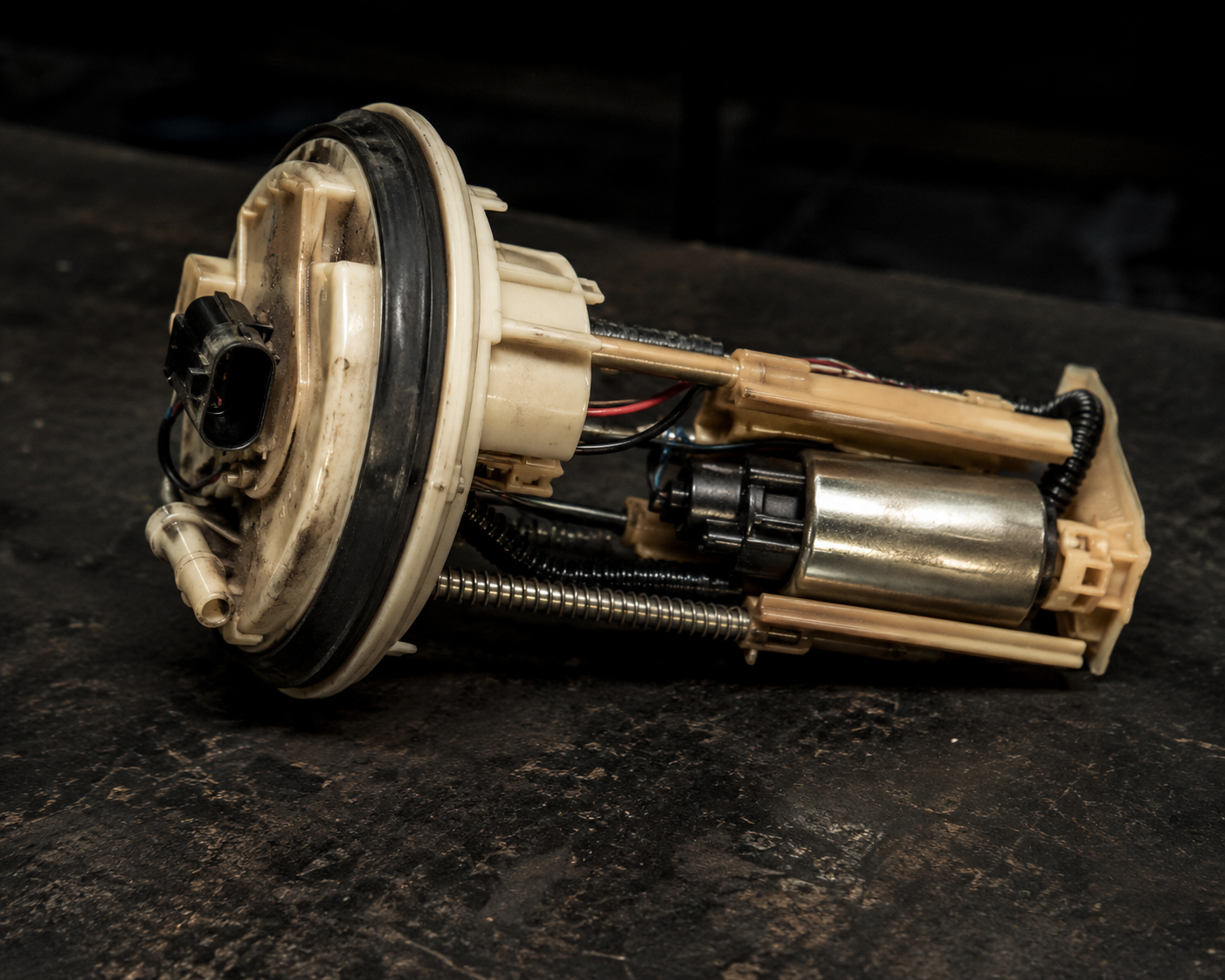
The fuel pump is an electric motor submerged inside the fuel tank. It draws fuel from the tank and pushes it through the fuel lines to the engine under pressure. Being submerged in fuel actually helps cool and lubricate the pump motor — which is why running your car consistently on a very low fuel level accelerates fuel pump wear.
Modern fuel pumps maintain pressure in the range of 3 to 7 bar depending on the system. This pressure is critical — too low and the engine runs lean and misfires, too high and fuel economy suffers.
How to check if your fuel pump is working:
- Turn the ignition key to the ON position without cranking the engine
- Listen at the fuel filler cap — you should hear a faint hum or whine for about 2 seconds as the pump primes the system
- No sound at all strongly suggests the pump has failed or is not receiving power
Never let your fuel tank run below a quarter tank regularly. The fuel pump relies on being submerged in fuel for cooling. Running on empty repeatedly causes the pump to overheat on every trip — shortening its lifespan significantly. This is one of the most common reasons fuel pumps fail prematurely on high mileage Japanese imports.
Symptoms of a failing fuel pump:
- Engine struggles to start — especially when hot
- Engine sputters or loses power at highway speeds under load
- Engine stalls and restarts after a few minutes of cooling
- Whining noise from the rear of the car near the fuel tank
- No fuel pump priming hum when key is turned to ON
3. Fuel Filter
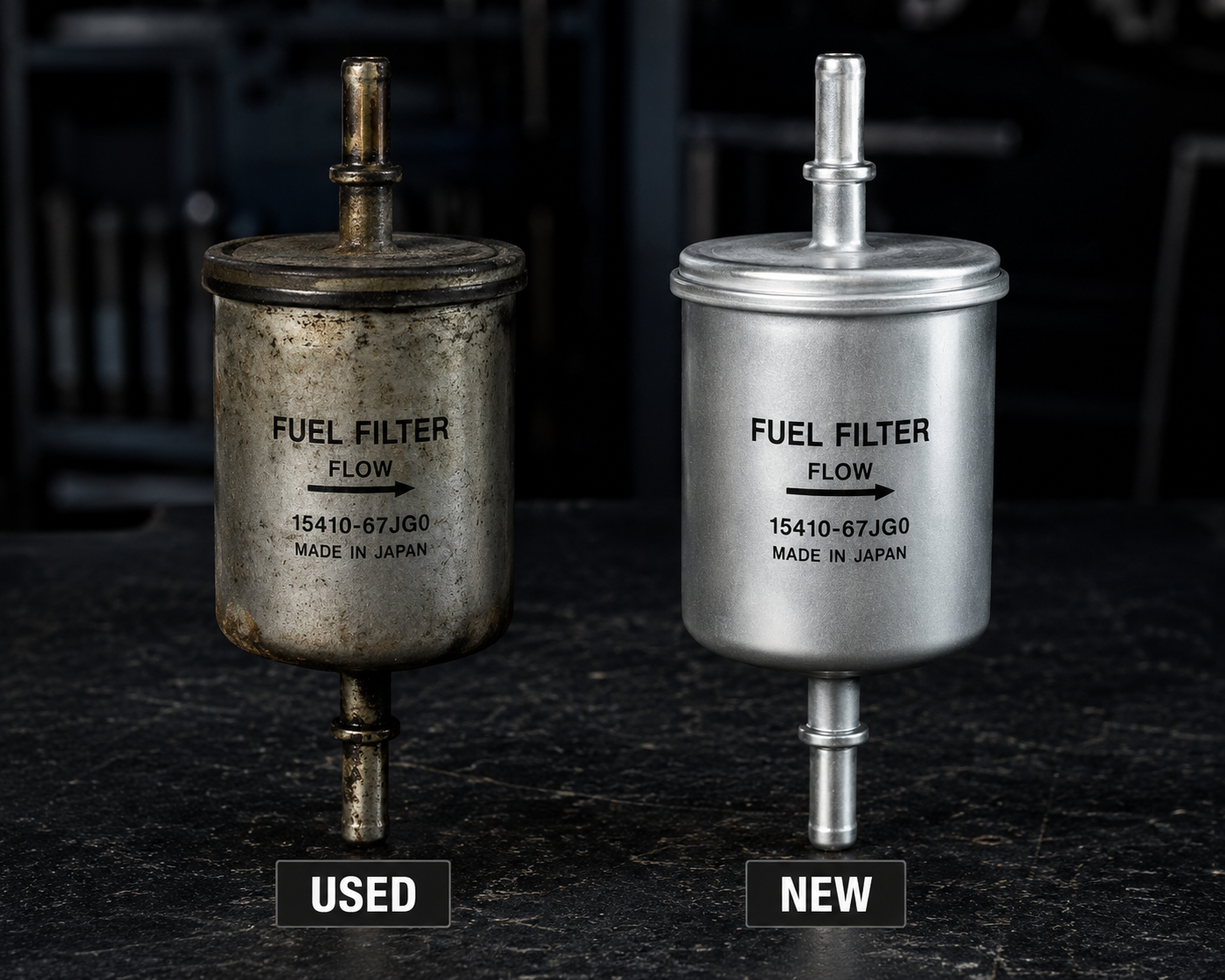
The fuel filter removes dirt, rust particles, and contaminants from the fuel before it reaches the injectors. Injector nozzles have extremely fine spray holes — any debris that reaches them causes partial blockage, uneven spray patterns, and misfires.
On older vehicles the fuel filter is an inline unit mounted under the car or in the engine bay — easy to inspect and replace as a regular service item. On many modern vehicles the filter is integrated into the fuel pump module inside the tank and is considered a lifetime component — though it still benefits from replacement on high mileage engines.
Signs of a clogged fuel filter:
- Engine hesitates or stumbles under hard acceleration
- Loss of power when climbing hills or towing
- Engine misfires under load but runs fine at idle
- Hard starting after the car sits for several days
4. Fuel Injectors
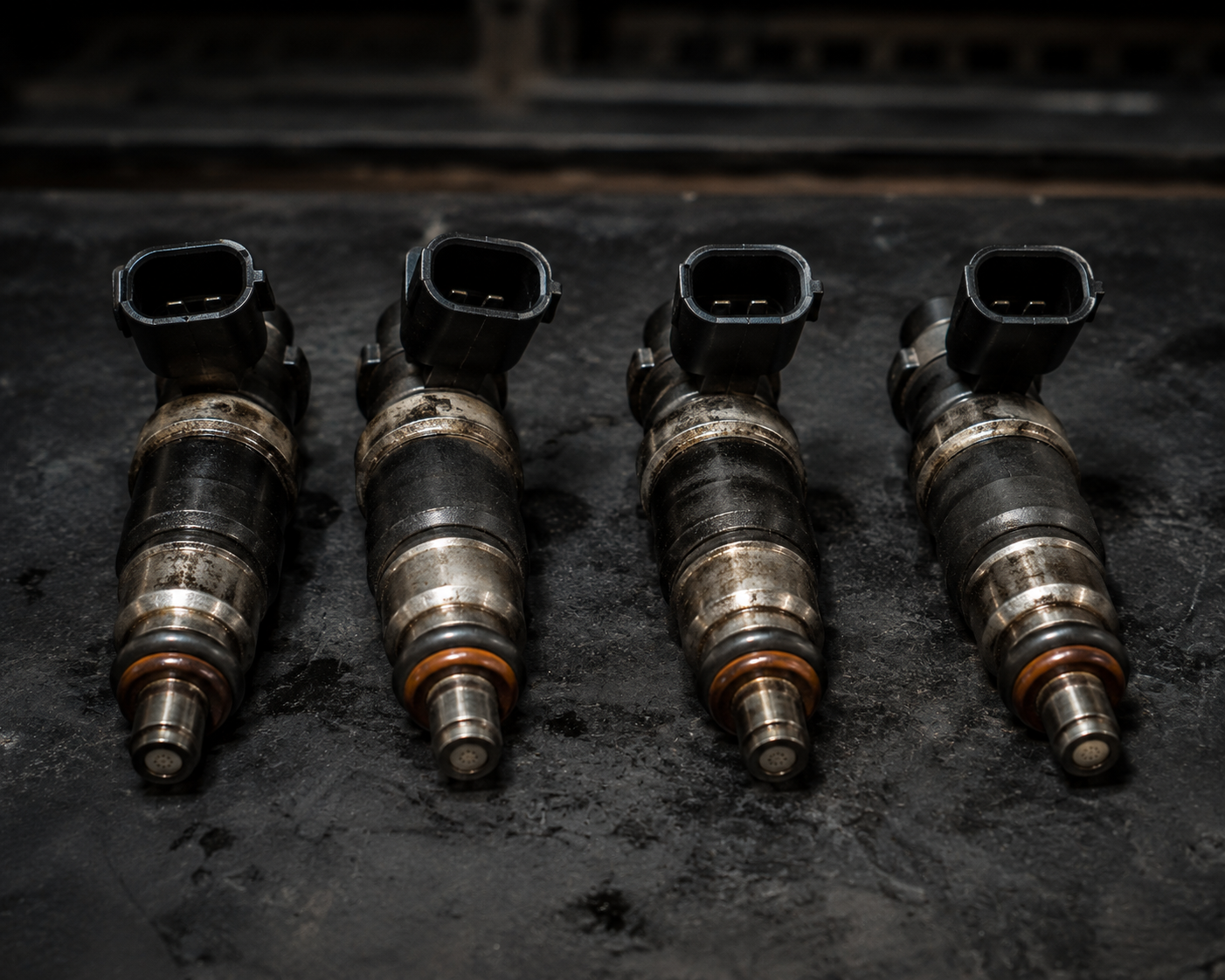
Fuel injectors are precision solenoid valves that open and close extremely rapidly on command from the ECU. Each injector serves one cylinder. When the ECU sends a signal the injector opens for a precise duration — measured in milliseconds — allowing a controlled amount of fuel to spray into the intake port or directly into the combustion chamber.
There are two main injection systems:
Port Fuel Injection (PFI) — injectors mount in the intake manifold and spray fuel into the intake port just before the intake valve. This is the traditional system used on most Japanese vehicles. Fuel spray onto the intake valve helps keep it clean — a major advantage over direct injection.
Gasoline Direct Injection (GDI) — injectors mount directly in the cylinder head and spray fuel into the combustion chamber at very high pressure. More efficient and powerful but prone to intake valve carbon buildup since no fuel washes the valves.
Symptoms of dirty or failing injectors:
- Rough idle — one cylinder misfiring from poor spray pattern
- Poor fuel economy from injector delivering too much or too little fuel
- Fuel smell from an injector stuck open leaking fuel into the intake
- Hard starting from injectors not holding pressure after shutdown
- Check engine light with specific cylinder misfire codes
Before replacing injectors, try a professional injector cleaning service. Ultrasonic cleaning restores spray pattern and flow rate on many injectors that would otherwise need replacement. This costs $150–$300 for a full set versus $400–$1,200 for replacement injectors — and works well on partially clogged injectors.
5. Fuel Rail and Fuel Pressure Regulator
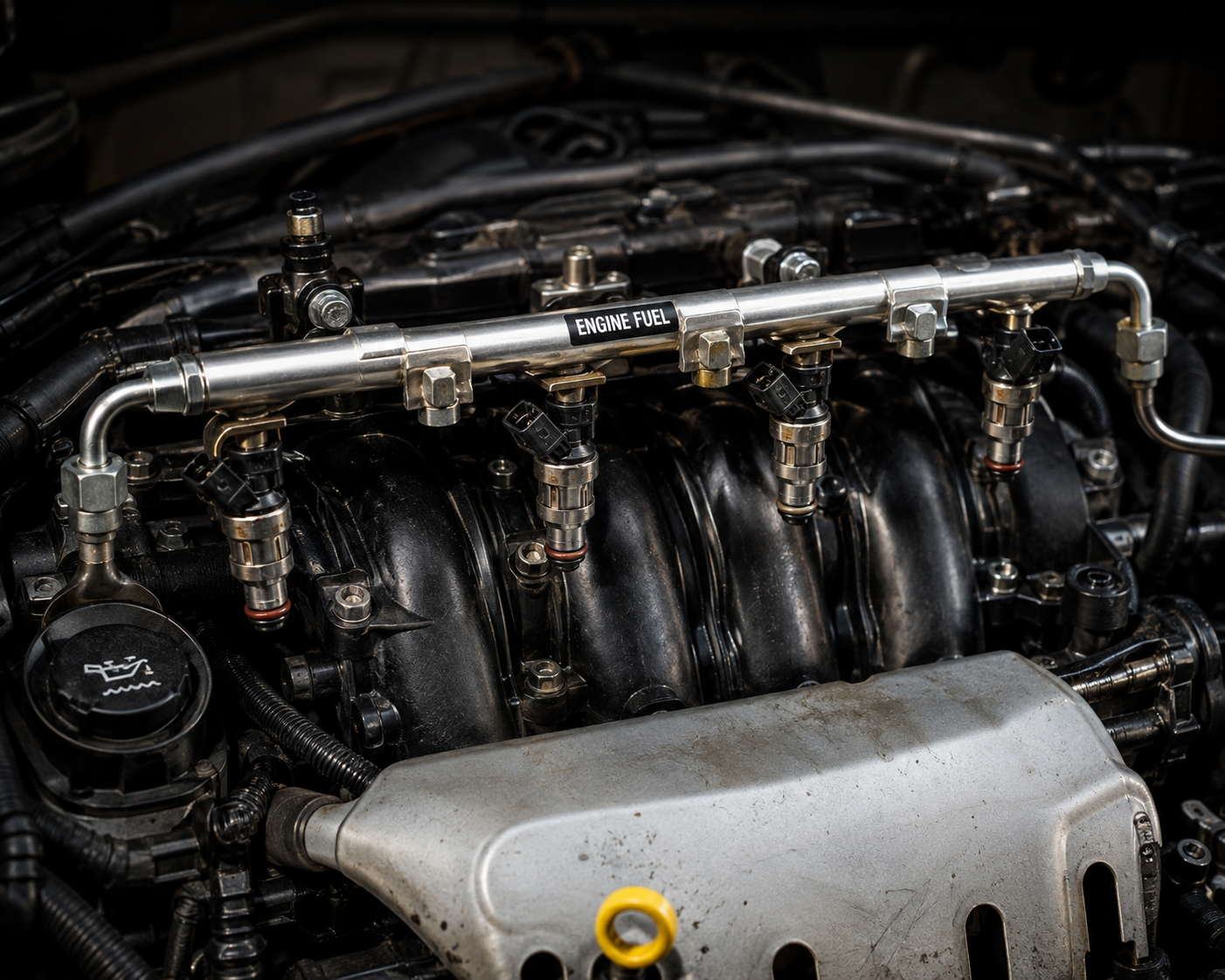
The fuel rail is a metal pipe that runs along the top of the engine connecting all the injectors. It acts as a reservoir that maintains consistent fuel pressure at every injector regardless of how many are firing simultaneously.
The fuel pressure regulator maintains the correct pressure in the fuel rail. On return-type systems it diverts excess fuel back to the tank. On returnless systems the pump speed is controlled electronically to maintain the correct pressure.
A faulty fuel pressure regulator causes:
- Rich running — too much fuel pressure forces excess fuel through injectors
- Lean running — insufficient pressure starves injectors of fuel
- Black smoke from exhaust — overly rich mixture
- Poor fuel economy
- Fuel smell from a failed regulator diaphragm leaking fuel into the intake
6. Fuel Lines and Fittings
High pressure steel or nylon fuel lines carry fuel from the tank to the engine. These lines must withstand constant pressure, heat, and vibration. Common failure points are where rigid lines connect to flexible rubber sections — corrosion, cracking, and loose fittings cause fuel leaks here.
A fuel leak of any size is a fire hazard. Fuel leaking onto a hot exhaust manifold or near an ignition source can ignite immediately. If you smell petrol strongly inside or outside the car, or see fuel dripping from under the vehicle, do not start the engine. Have the vehicle towed to a workshop — do not drive it.
Port Fuel Injection vs Direct Injection — Which Is Better?
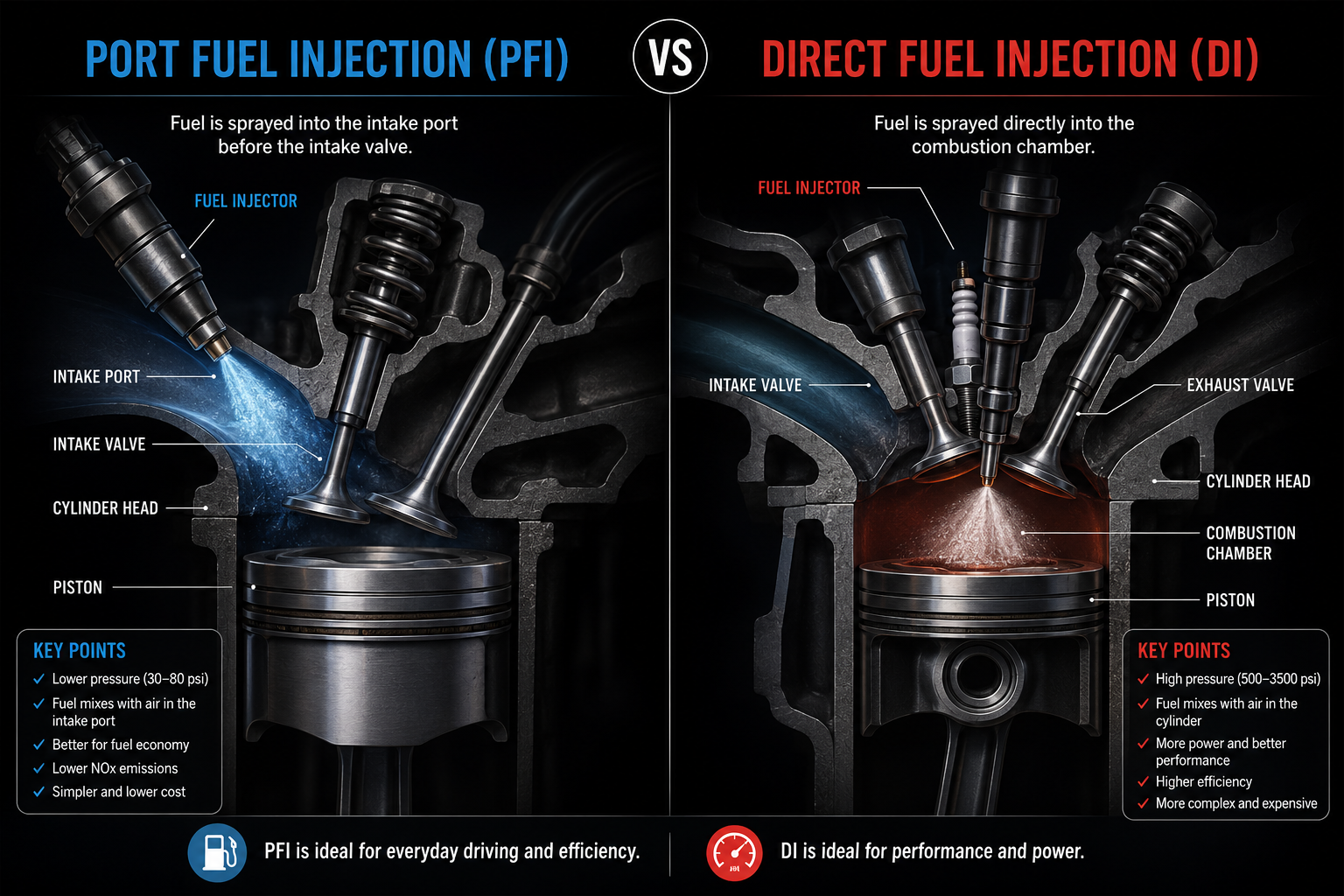
| Feature | Port Fuel Injection (PFI) | Direct Injection (GDI) |
|---|---|---|
| Fuel spray location | Intake port — before valve | Direct into cylinder |
| Fuel efficiency | Good | Better — up to 15% more efficient |
| Power output | Standard | Higher — better atomisation |
| Intake valve carbon | Self-cleaning from fuel spray | Prone to carbon buildup |
| Injector pressure | 3–7 bar | 100–350 bar |
| Common in Kenya | Most older Japanese imports | Newer Toyota, Subaru, Honda models |
Common Fuel System Problems and Their Causes
| Symptom | Most Likely Cause | Urgency |
|---|---|---|
| Engine cranks but will not start | Failed fuel pump, no fuel delivery | Very High |
| Hard starting when hot | Weak fuel pump, injector leak-down | High |
| Hesitation under hard acceleration | Clogged fuel filter, weak pump | High |
| Rough idle, one cylinder misfire | Dirty or stuck injector | High |
| Strong petrol smell inside car | Fuel leak — injector, line, or regulator | Very High — fire risk |
| Black smoke from exhaust | Rich mixture — regulator or injector fault | High |
| Poor fuel economy suddenly | Leaking injector, wrong fuel pressure | Medium |
| Engine loses power at highway speed | Weak fuel pump unable to maintain pressure | High |
Fuel System Maintenance — What to Do and When
| Service | Interval | Why It Matters |
|---|---|---|
| Fuel filter replacement (inline type) | Every 40,000–60,000 km | Prevents injector damage from contamination |
| Fuel injector cleaning | Every 60,000–80,000 km | Restores spray pattern and fuel economy |
| Fuel tank inspection | Every 100,000 km | Check for internal rust or contamination |
| Fuel cap seal check | Annually | Prevents evaporative emission codes |
Estimated Repair Costs
| Repair | Estimated Cost |
|---|---|
| Fuel filter replacement | $60–$150 |
| Fuel pump replacement | $300–$800 |
| Injector cleaning (full set) | $150–$300 |
| Injector replacement (single) | $100–$300 per injector |
| Injector replacement (full set of 4) | $400–$1,200 |
| Fuel pressure regulator | $100–$350 |
| Fuel rail replacement | $200–$600 |
| Fuel line repair | $100–$400 |
| Fuel tank replacement | $400–$1,000 |
How To Keep Your Fuel System Healthy
- Never run the tank below a quarter — protects the fuel pump from overheating
- Use quality fuel from reputable stations — contaminated fuel damages injectors and clogs filters faster
- Replace the fuel filter at the recommended interval — a clogged filter forces the pump to work harder and shortens its life
- Use a quality fuel injector cleaner additive every 15,000–20,000 km — helps keep injectors flowing cleanly between professional cleaning services
- Address fuel smell or visible leaks immediately — fuel leaks are fire hazards, not minor inconveniences
- If buying a used Japanese import — have the fuel system inspected before purchase, particularly the injectors and fuel pump condition
FAQ
How do I know if my fuel pump is failing or if it is the fuel filter? A failing fuel pump often causes symptoms under high load — highway driving, hill climbing, or hard acceleration — because the weak pump cannot maintain pressure under demand. A clogged filter causes similar symptoms but typically also affects idle quality. A fuel pressure test at a workshop confirms which one is the problem — this test takes about 15 minutes and is inexpensive.
Can I use fuel injector cleaner additives instead of professional cleaning? Additive cleaners help maintain clean injectors and prevent light deposits from building up. They do not restore injectors that are already partially blocked or have worn spray patterns. If your car already has rough idle or misfire codes from injector problems, professional ultrasonic cleaning or replacement is needed.
Why does my car start fine when cold but struggle when hot? Hot start problems are a classic fuel pump symptom. A failing pump that delivers adequate pressure when cold may not cope with the additional demands of heat. This can also indicate injectors that are not holding pressure after shutdown — fuel bleeds back to the tank and the engine needs extra cranking to reprime the system.
Is it safe to drive with a fuel smell? No. A fuel smell means fuel is escaping somewhere it should not be. Even a small fuel leak near a hot exhaust component or ignition source can cause a fire. If you smell petrol inside or outside the car, have it inspected immediately before driving further.
What is the difference between fuel system problems and ignition system problems? Both cause similar symptoms — rough idle, misfires, poor power. The key difference: fuel system problems tend to be load-dependent (worse under acceleration or high demand) while ignition problems tend to cause misfires at idle and light throttle as well. An OBD-II scan with specific misfire codes pointing to individual cylinders usually indicates ignition. Fuel pressure testing determines whether the fuel system is the cause.
More From Engine
 Engine
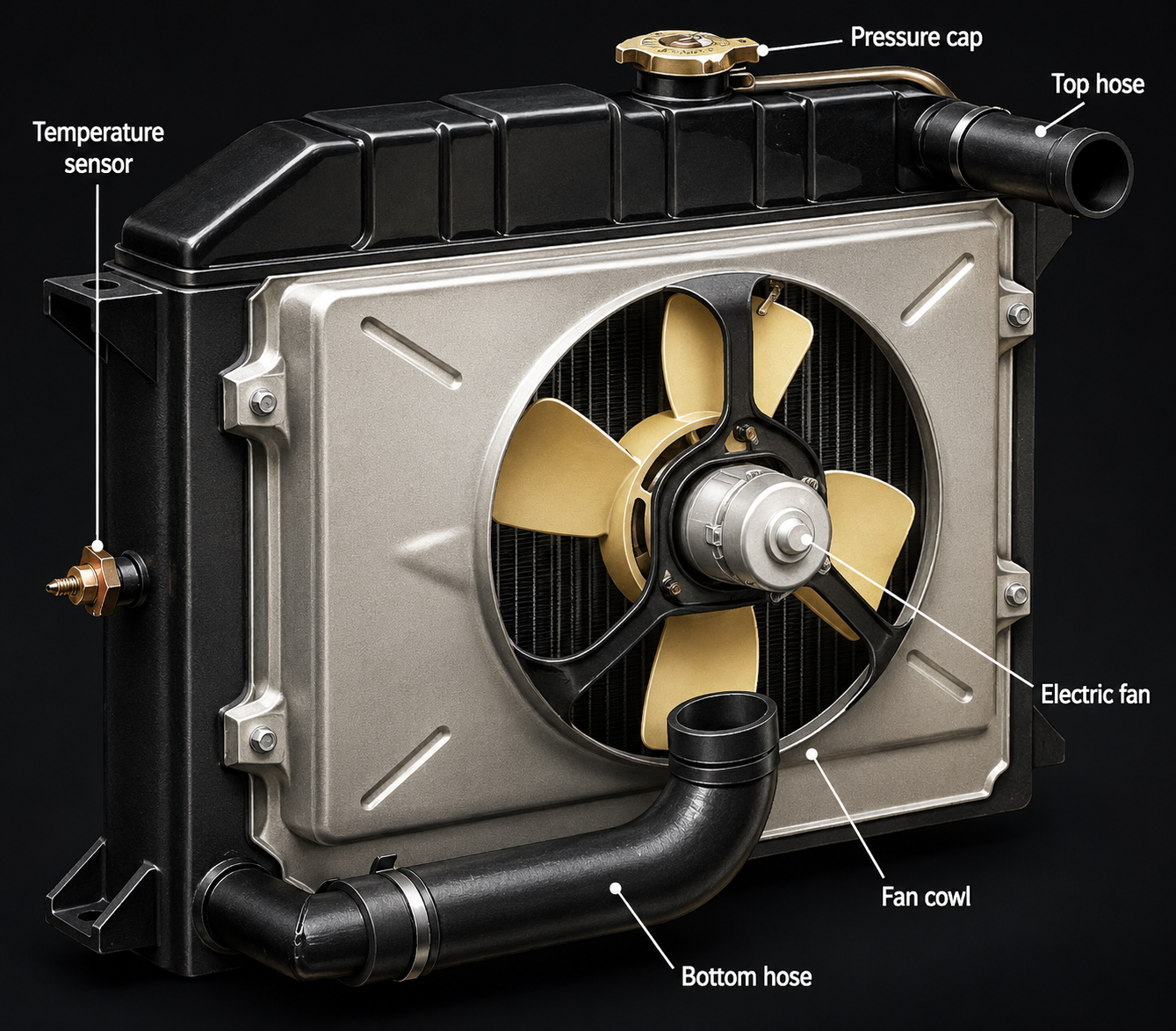
How a Car Radiator Works — and What Goes Wrong
Your radiator keeps your engine from destroying itself. Here is how it works, what goes wrong, and how to maintain it before it causes an expensive breakdown.
Aug 20, 2026 5 min
Read more  Engine
Car Shakes or Vibrates When Braking — Causes and Fix
Vibration through the steering wheel or brake pedal when stopping is one of the most common brake complaints. Here is what is causing it and what it costs to fix properly.
Aug 11, 2026 5 min
Read more 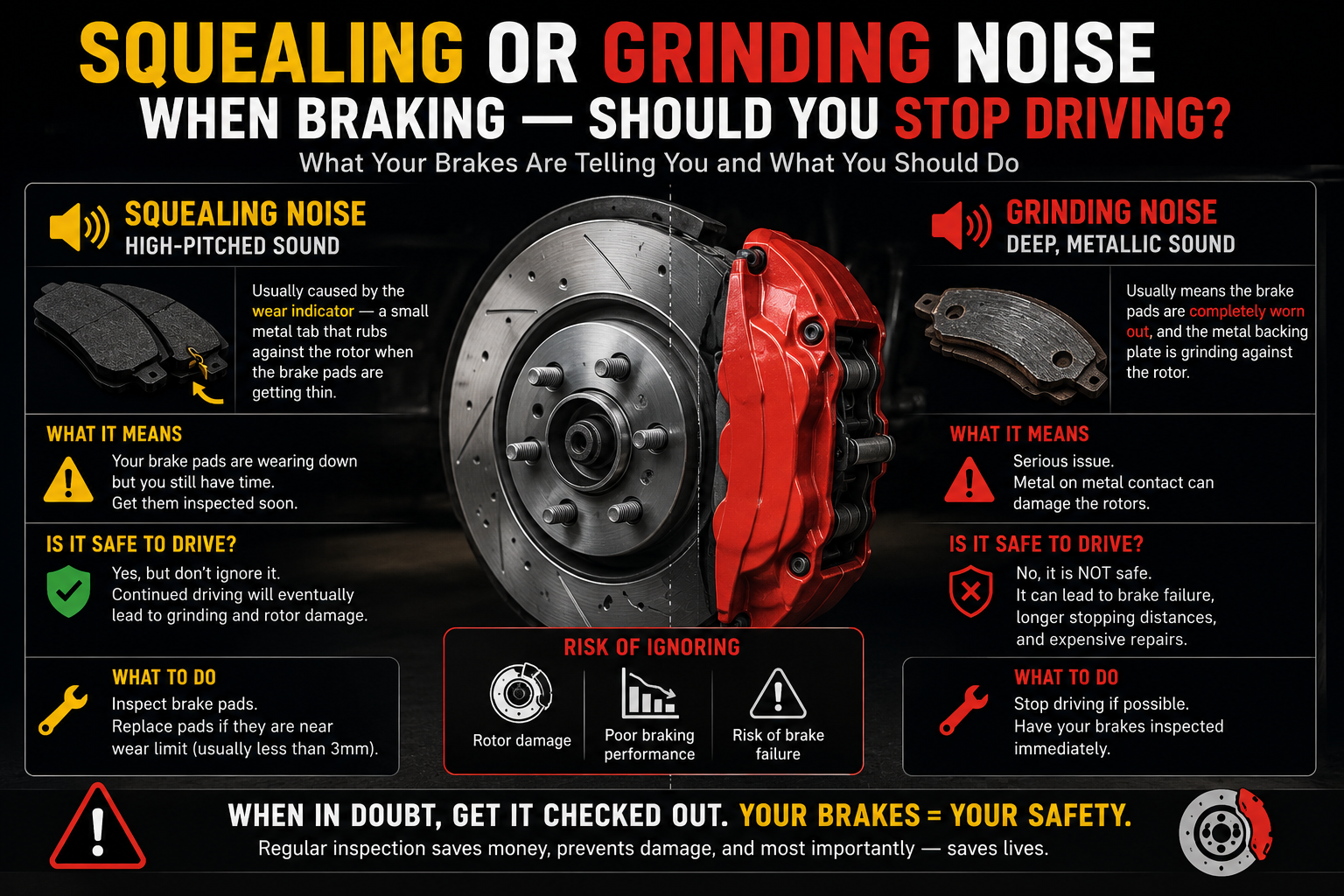 Engine
Squealing or Grinding Noise When Braking — Should You Stop Driving?
Brake noise is never random. Squealing means something specific. Grinding means something else entirely — and one of them requires you to stop driving immediately.
Aug 11, 2026 5 min
Read more