One hidden component inside your engine controls everything — and if it fails, your engine can destroy itself in seconds. That component is your timing system. Most drivers don't even know whether their car uses a timing belt or a timing chain — and that gap in knowledge can cost thousands.
Engine
Engine
Timing Belt vs Timing Chain: The Difference That Can Save Your Engine
February 8, 2026 6 min readEngine
Most drivers don't know which one their engine uses — and that gap in knowledge can cost thousands.
Written by
Car Guide CrewThe Car Guide Crew editorial team publishes practical, mechanic-verified automotive knowledge — helping drivers understand, diagnose, and maintain their vehicles.
DiagnosticsEngine SystemsMaintenanceElectrical Systems
Published: Feb 8, 2026
What Is the Timing System?
The timing belt or timing chain keeps the crankshaft and camshaft perfectly synchronized. This ensures the engine's valves open and close at exactly the right moment during the combustion cycle. If timing is off, performance suffers. If timing fails completely, serious engine damage occurs.
Timing Belt (Rubber Belt)
- Made of reinforced rubber with internal fibers
- Quieter operation than a chain
- Lighter and less expensive to manufacture
- Must be replaced on a scheduled interval — typically every 60,000–100,000 km
- Does not warn before it snaps — failure is sudden
Timing Chain (Metal Chain)
- Made of hardened steel links
- Designed to last the life of the engine with proper oil maintenance
- Slightly noisier — may rattle if worn or if oil is neglected
- Can stretch over time, causing timing to drift
- Not a "set and forget" component — depends heavily on regular oil changes
Key Differences at a Glance
| Feature | Timing Belt | Timing Chain |
|---|---|---|
| Material | Rubber | Hardened steel |
| Noise | Quiet | Slight rattle when worn |
| Replacement interval | 60,000–100,000 km | Lifespan dependent on oil maintenance |
| Failure type | Sudden snap | Gradual stretch, then failure |
| Cost to replace | $400–$1,000 | $800–$2,500+ |
What Happens When a Timing Belt Snaps?
When a timing belt snaps while the engine is running, the camshaft stops instantly while the crankshaft continues spinning. In interference engines — which most modern engines are — this causes pistons to strike the open valves.
The result:
- Bent or broken valves
- Damaged pistons
- Possible engine block damage
- Full engine rebuild or replacement required
If your car has a timing belt and you don't know when it was last replaced, treat it as overdue. The cost of replacement ($400–$1,000) is a fraction of the cost of engine repair ($3,000–$8,000+).
Does Your Car Have a Belt or Chain?
Check your owner's manual or search your vehicle's make, model, and year. Common belt engines include many Honda, Toyota, Subaru, and VW models. Many newer engines use chains. If unsure, ask a mechanic to inspect — it's a quick visual check with the engine cover removed.
More From Engine
 Engine
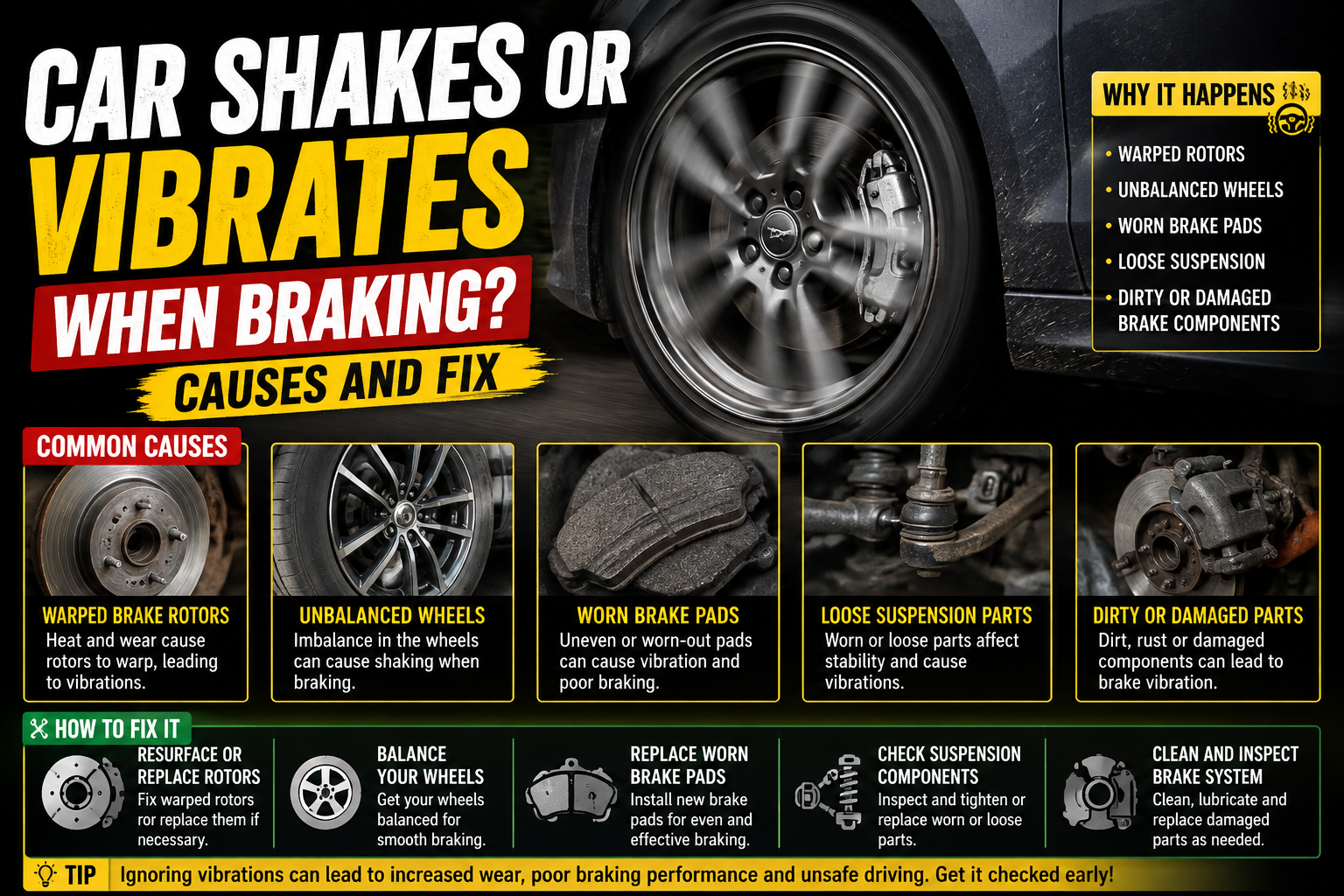
Car Shakes or Vibrates When Braking — Causes and Fix
Vibration through the steering wheel or brake pedal when stopping is one of the most common brake complaints. Here is what is causing it and what it costs to fix properly.
Aug 11, 2026 5 min
Read more  Engine
Squealing or Grinding Noise When Braking — Should You Stop Driving?
Brake noise is never random. Squealing means something specific. Grinding means something else entirely — and one of them requires you to stop driving immediately.
Aug 11, 2026 5 min
Read more  Engine
Car Cranks But Won't Start — Here Is What Is Wrong
The engine turns over but never fires. Here is the exact diagnostic process mechanics use to find the cause fast.
Aug 8, 2026 5 min
Read more